

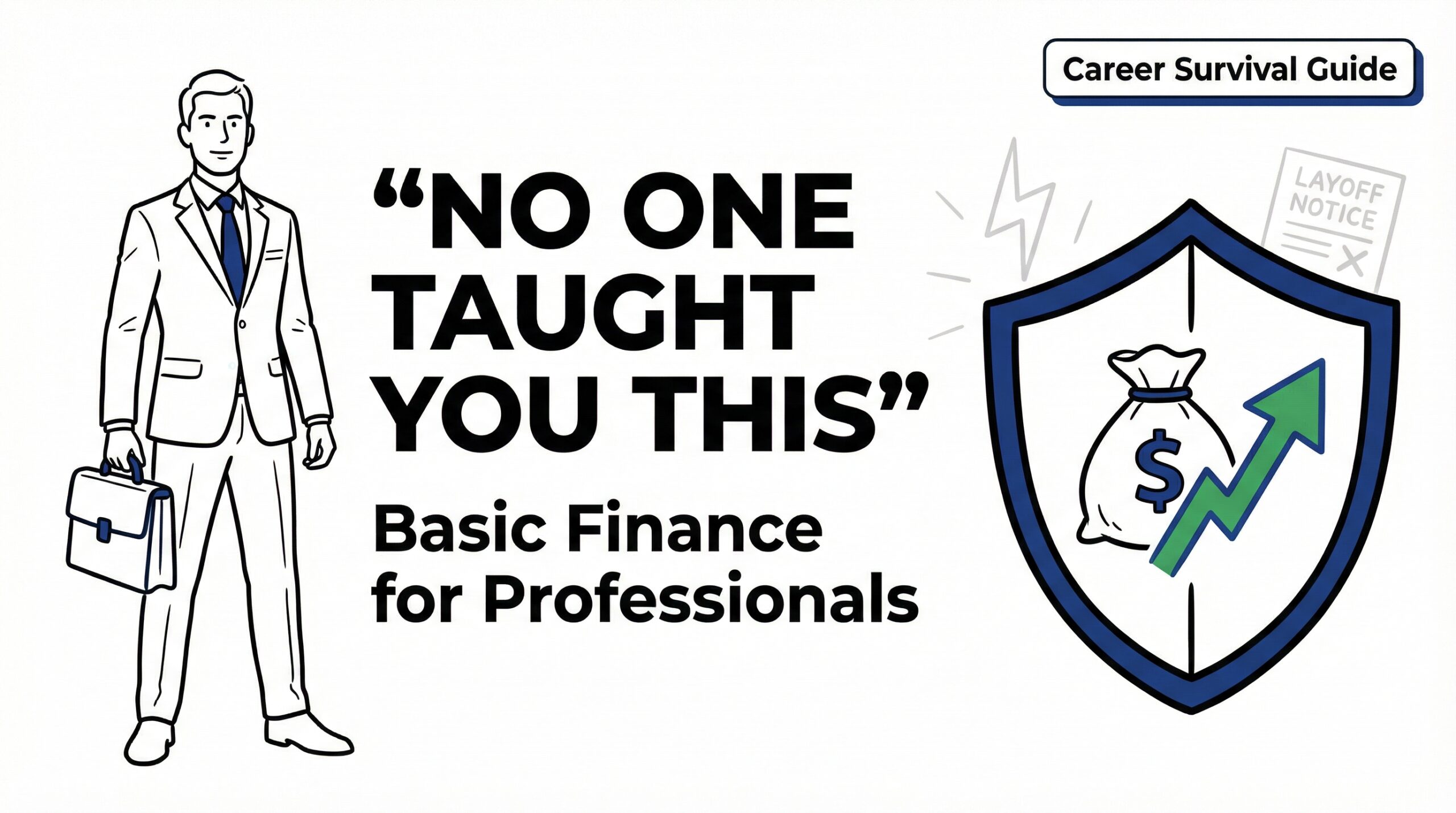
Most professionals focus on increasing income.
Very few focus on protecting it.
And that’s where career fragility begins.
If you lose your job tomorrow:
- Does your financial system survive?
- Does your family stay protected?
- Do you have 6–12 months of runway?
In this guide, we break down the 5-step financial foundation every working professional must build — not as investment advice, but as career risk management.
Prefer video? Watch the complete breakdown on the Corporate Growth Hacks YouTube channel
Why Financial Planning Is Career Risk Management (Not Just Money Management)
Modern careers are volatile.
Layoffs.
Medical emergencies.
Industry slowdowns.
Automation shifts.
Without financial stability, even high performers become vulnerable.
Financial hygiene gives you:
- Negotiation power
- Exit options from toxic workplaces
- Confidence during uncertainty
- Strategic long-term thinking
Let’s break down the 5 foundational pillars.
1. Term Insurance – Protect Your Income First
Why Income Protection Is Non-Negotiable
If someone depends on your income, term insurance is essential.
It protects:
- Your family’s lifestyle
- Children’s education goals
- Loan obligations
When Should You Buy It?
Buy when you are:
- Young
- Healthy
- Early in your career
Premiums are lower and approvals are easier.
2. Independent Health Insurance – Don’t Depend Only on HR
Most professionals rely completely on company-provided insurance.
That’s risky.
Coverage disappears when:
- You switch jobs
- You get laid off
- Company policies change
Why Early Purchase Matters
Buying early ensures:
- Lower premiums
- Coverage before health complications arise
- Long-term continuity
Your protection should not be controlled by your employer.
3. Build a 6–12 Month Emergency Fund
What Should It Cover?
At minimum:
- Rent/EMI
- Groceries
- Utilities
- Insurance premiums
- Basic expenses
Why This Is Your Career Leverage Fund
This fund gives you:
- Freedom to leave toxic environments
- Time to upskill
- Negotiation power
- Confidence during layoffs
Savings is survival.
Emergency funds create leverage.
4. Start Early with Direct Mutual Fund Investments
The Cost of Waiting
Many professionals say:
“I’ll invest when I earn more.”
That delay destroys compounding power.
Time matters more than salary size.
Why Direct Plans Are Better
Direct mutual funds:
- Avoid distributor commissions
- Improve long-term returns
- Increase wealth accumulation
Even small amounts invested consistently create exponential impact.
5. Build Multiple Income Streams
Depending on one salary creates one point of failure.
Job stability is temporary.
Examples of Additional Income Streams
- Freelancing
- Consulting
- Skill monetization
- Content creation
- Strategic investments
When you build additional income:
- Financial fear reduces
- Career decisions improve
- Confidence increases
This accelerates professional growth.
How Financial Stability Changes Your Career Decisions
When your base is strong:
- You negotiate better
- You avoid desperation decisions
- You tolerate less toxicity
- You focus on skill growth
Financial planning is not about becoming rich quickly. It’s about building intelligent career resilience.
Watch the Full Breakdown on YouTube
If you prefer a structured explanation with practical examples, watch the complete video on the Corporate Growth Hacks YouTube channel.
https://www.youtube.com/@CorporateGrowthHacks
If this guide helped you, consider subscribing.
At CGH, Where We Don’t Just Work Hard. We Work Smart!