
Most outsourcing decisions are presented as rational.
Organizations evaluate vendors based on cost, service levels, scalability, and technical capability. On paper, the process appears structured and objective.
But in reality, many BPO strategies rely on something far more subtle: psychology.
Understanding the psychology behind outsourcing decision making is critical—because what appears to be a logical choice is often influenced long before the final evaluation begins.
This article explores how BPO companies use behavioral mechanisms to win and retain clients, and why vendor lock-in happens more often than most organizations realize.
The Illusion of Rational Vendor Selection
In a typical outsourcing cycle, organizations follow a familiar path:
- Define requirements
- Invite proposals
- Evaluate vendors
- Compare pricing and performance
This framework assumes that decisions are made purely on merit.
However, this assumption overlooks a key factor:
decisions are shaped by context, not just data. By the time a vendor is formally evaluated, the groundwork influencing that decision may already be in place.
If you are interested in watching a video for full understanding in a visual form, you can view it below
How BPO Strategies Create Early Advantage
The “Low-Risk Entry” Strategy
Most outsourcing engagements begin with minimal commitment:
- Pilot projects
- Proof-of-concept engagements
- Limited scope operations
This approach is positioned as risk mitigation.
But it serves another purpose.
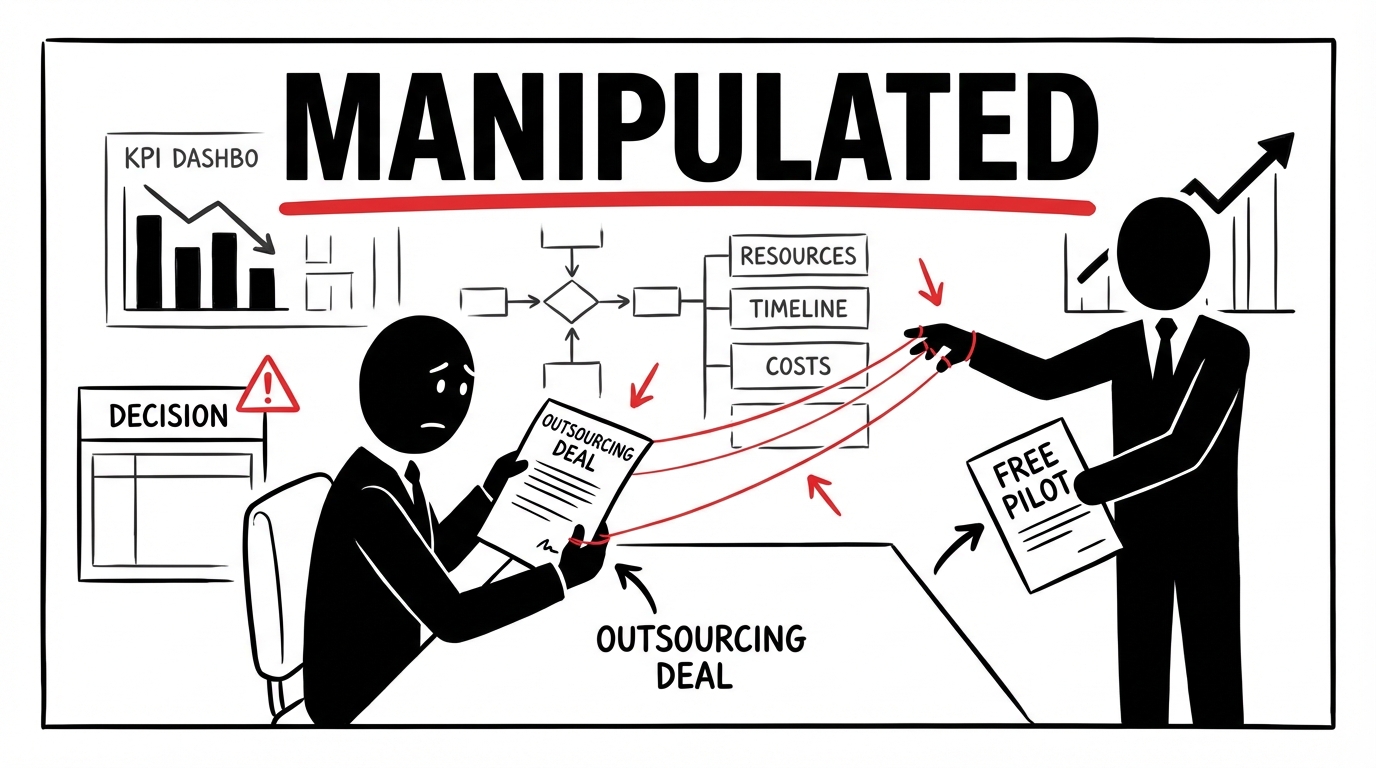
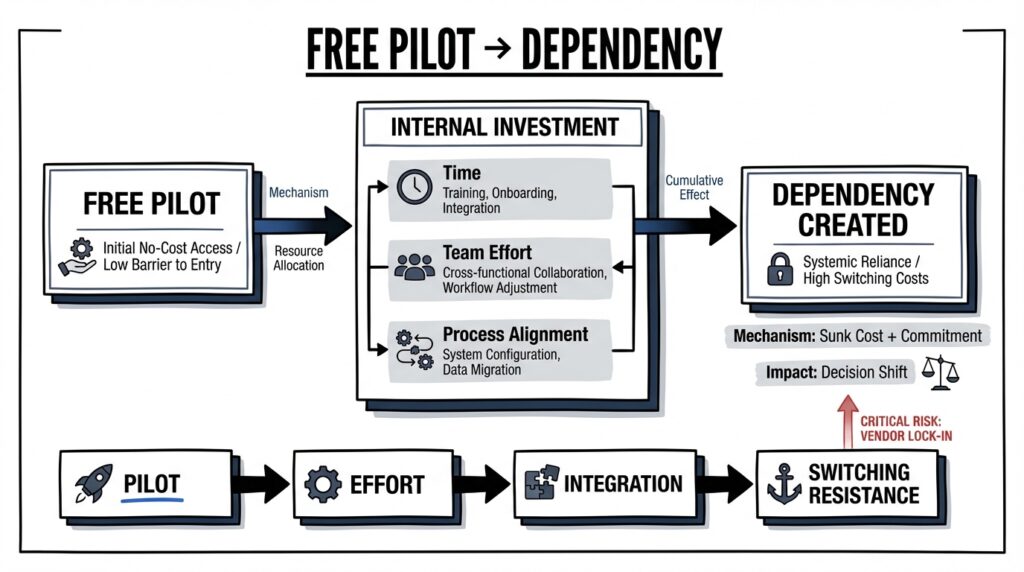
It creates early-stage dependency.
Once internal teams start working with a vendor:
- Time is invested
- Processes begin to align
- Knowledge flows externally
At this point, the vendor is no longer just being evaluated—they are being integrated.
Dependency Before Decision
Why “Free” is Rarely Neutral
In many BPO business models, vendors offer initial support that appears low-cost or even free.
This could include:
- Pilot phases
- Additional resources
- Proactive issue resolution
While beneficial on the surface, these actions influence perception.
The organization begins to associate the vendor with:
- Stability
- Responsiveness
- Reliability
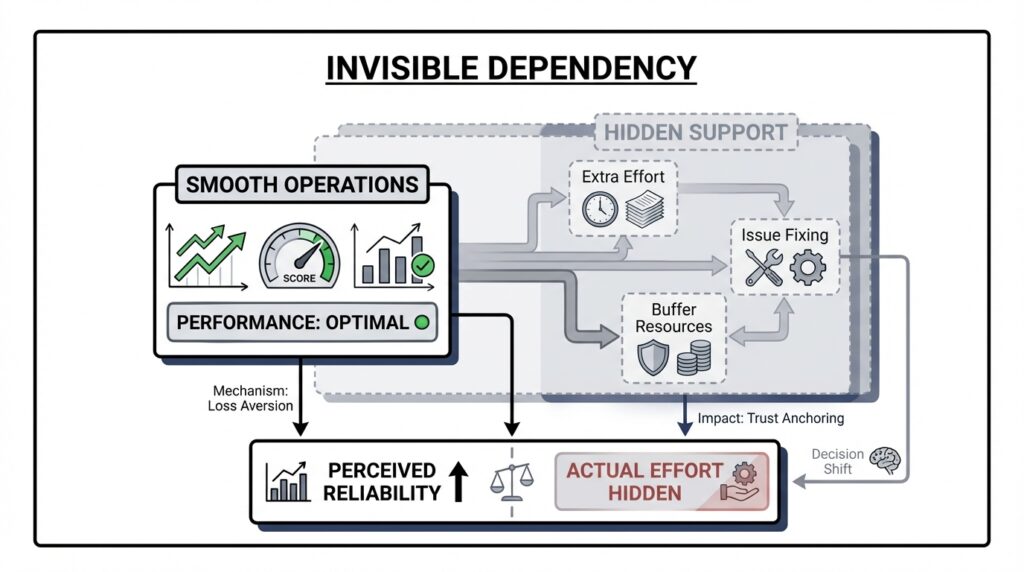
Over time, this creates a subtle shift:
The question moves from:
“Is this the best vendor?”
To:
“Things are working—why change?” This shift is one of the most powerful forms of vendor lock-in.
The Stability Trap in Outsourcing
When “Good Enough” Becomes the Benchmark
Once operations stabilize, the evaluation criteria change.
Instead of optimizing for performance, organizations begin optimizing for continuity.
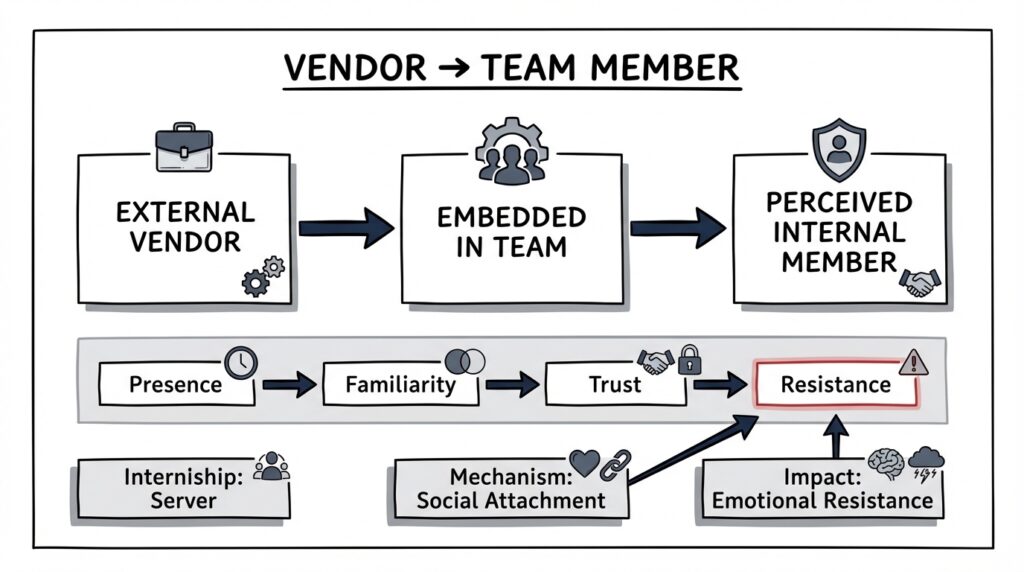
This leads to:
- Reduced scrutiny
- Lower comparison frequency
- Increased tolerance for gaps
From a governance perspective, stability is positive.
But from a strategic perspective, it can prevent improvement. This is where many outsourcing relationships plateau.
The Human Factor in Vendor Lock-In
Beyond Contracts and SLAs
Outsourcing is not just a systems interaction—it is a people interaction.
Vendor teams often:
- Participate in internal meetings
- Collaborate closely with stakeholders
- Build informal relationships
Over time, this creates familiarity.
And familiarity introduces bias.
Replacing a vendor is no longer just a process change—it becomes a relationship disruption. This factor is rarely quantified, but heavily influences decisions.
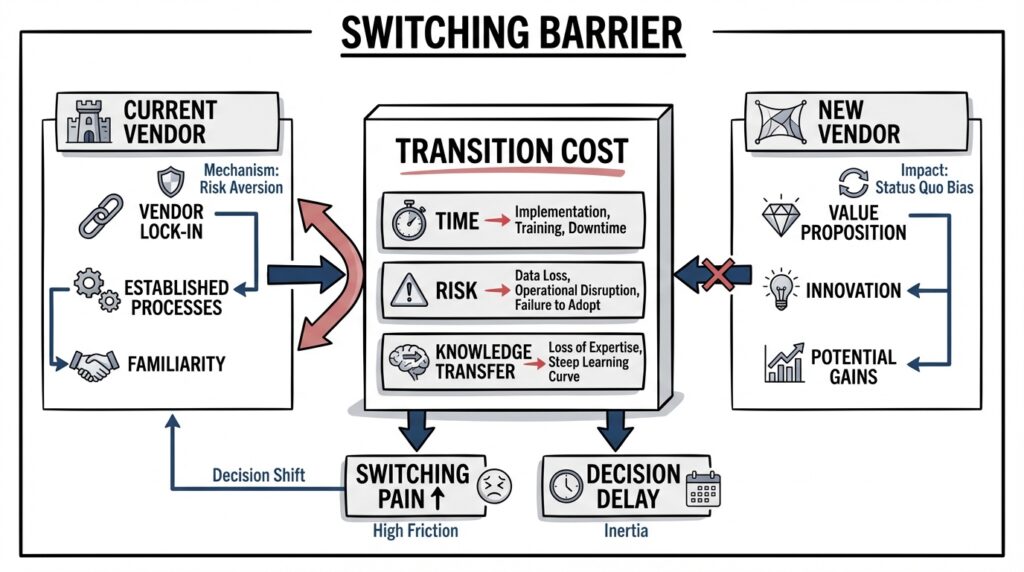
Switching Costs: Real vs Perceived
The Power of Transition Framing
One of the most effective outsourcing strategies is emphasizing transition complexity.
Organizations are made aware of:
- Migration timelines
- Knowledge transfer risks
- Operational disruptions
These are valid considerations.
However, their perception is often amplified.
This creates a psychological effect:
Even when a better vendor exists,
switching feels riskier than staying. This is a classic example of how outsourcing risks are framed to influence decisions.
Performance Framing in BPO Models
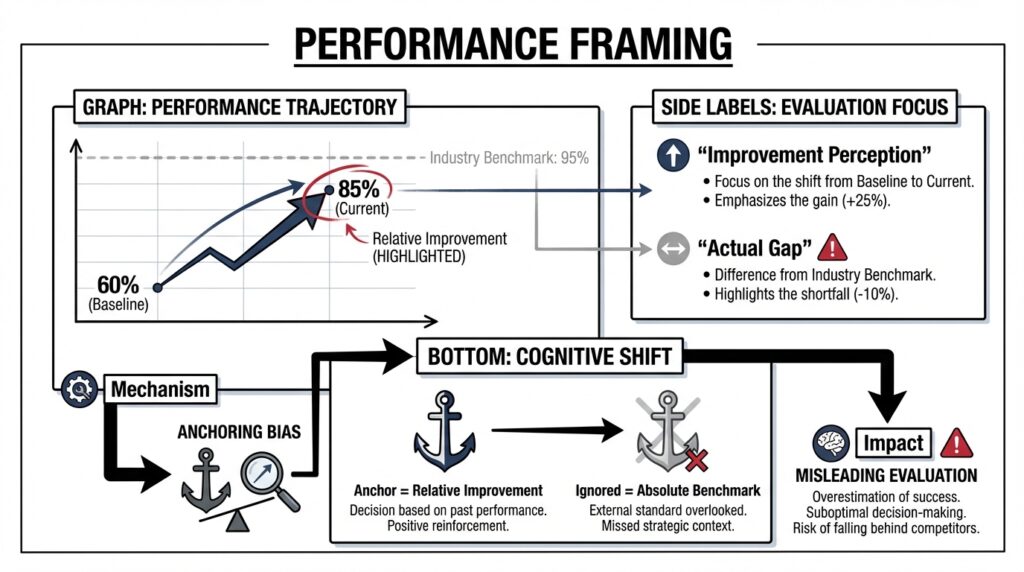
Relative vs Absolute Metrics
Performance reporting often focuses on improvement.
For example:
- Service levels improved from 60% to 85%
While this appears positive, it may not reflect the full picture.
If industry benchmarks are significantly higher, the improvement narrative can be misleading.
This is known as framing bias.
Organizations tend to anchor on visible improvement rather than absolute standards. As a result, vendor evaluation becomes perception-driven rather than benchmark-driven.
On a personal level, if you are trying to improve yourself and get better prepared for corporate readiness, we have various checklists in our download section. Feel free to grab your free copy.
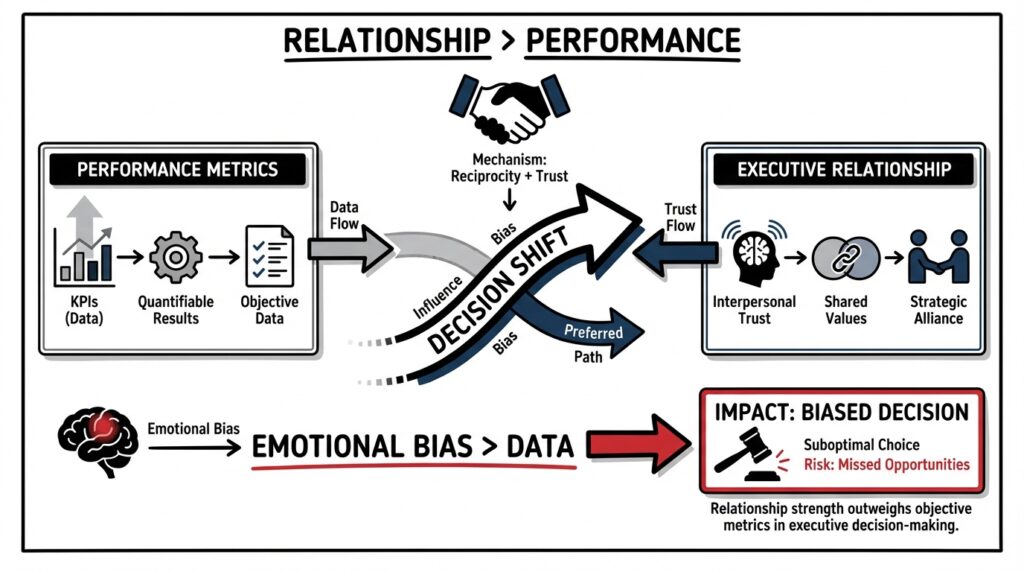
When Relationships Influence Outcomes
The Shift from Objective to Relational Decisions
At senior levels, outsourcing decisions are rarely purely analytical.
They are influenced by:
- Trust
- Communication comfort
- Established working relationships
Over time, these factors gain weight.
This creates a scenario where:
- Performance becomes one of many variables
- Relationship stability becomes a priority
While trust is valuable, it can also reduce objectivity.
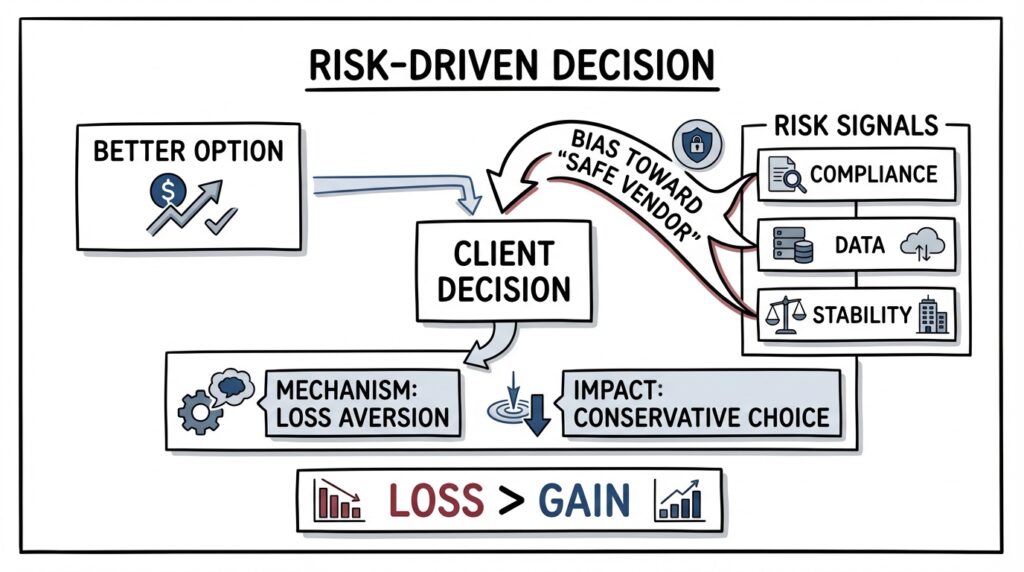
The Real Decision Shift
From Optimization to Risk Avoidance
As outsourcing relationships mature, a fundamental shift occurs.
The decision is no longer:
“What is the best option?”
It becomes:
“What is the least disruptive option?”
This shift explains why many organizations continue with vendors even when better alternatives exist.
It is not a failure of evaluation. It is a consequence of accumulated context.
What Leaders Should Reconsider
Understanding these dynamics does not imply that outsourcing strategies are flawed.
Many of these mechanisms:
- Improve onboarding
- Enhance collaboration
- Reduce operational friction
However, they also influence decision-making. Leaders should periodically step back and reassess:
Key Questions to Ask
- Are we comparing vendors objectively or within an established frame?
- Are we optimizing for performance or preserving stability?
- Are switching concerns based on data or perception?
These questions help reset the evaluation process.
We have also written about the strong SWOT Analysis for business which can help you prepare your business for headwinds. Do consider to read if you are interested.
Conclusion: Outsourcing Is a System, Not Just a Vendor Choice
Outsourcing decisions are often treated as vendor comparisons.
In reality, they are system-level decisions.
Once a vendor becomes embedded:
- Processes adapt
- Teams align
- dependencies form
At that point, replacing the vendor requires more than selection.
It requires system change.
This is why many BPO companies do not need to be the best option.
They only need to become difficult to replace. Understanding this distinction is essential for making better, more informed outsourcing decisions.
For more such content and learnings, do subscribe and follow us on our CGH YouTube channel.