

Becoming a supervisor is a major milestone in any professional’s career.
For many people, it represents recognition of years of hard work, reliability, and consistent performance. Whether the promotion comes through an internal job posting, a leadership track within the organization, or a move to a new company, stepping into a supervisory role signals a shift in responsibility and expectations.
However, what many professionals discover quickly is that the promotion itself is not the hardest part of leadership.
The real challenge begins once you start leading people.
The skills that helped you succeed as an individual contributor are often very different from the skills required to guide and motivate a team. Your responsibilities are no longer limited to your own work. Instead, your success becomes closely tied to the performance, engagement, and effectiveness of your team.
This transition is where many first-time supervisors struggle.
Understanding how to approach your early days as a supervisor can make a significant difference in how your team perceives you and how successful your leadership becomes over time.
This New Supervisor Guide explores how supervisors can build trust, understand team dynamics, and establish strong leadership foundations during their first 90 days.
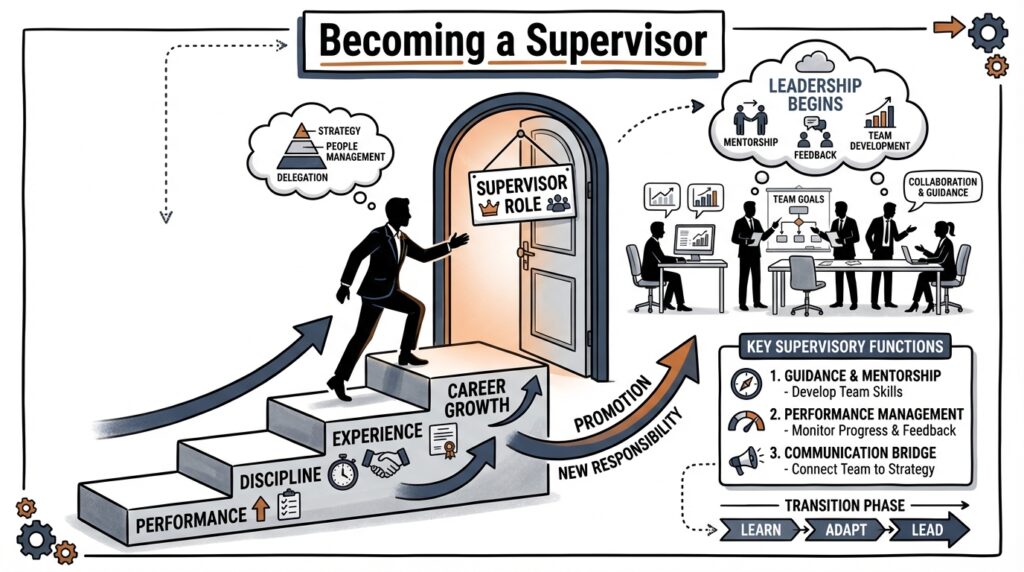
The Shift from Individual Contributor to First-Time Supervisor
Before becoming a supervisor, your professional success is typically measured by your personal output.
You focus on completing tasks, solving problems, meeting deadlines, and delivering results. Your performance evaluations often revolve around how effectively you execute your responsibilities.
Once you move into a supervisory role, this dynamic changes dramatically.
Your effectiveness is no longer defined only by your own work. Instead, it becomes closely tied to the performance of your team. As a leader, you are responsible not only for delivering results but also for enabling others to succeed.
This shift requires a new set of capabilities, including:
- Communication and influence
- Understanding team dynamics
- Conflict management
- Trust building
- Strategic thinking
The transition can feel challenging because you are now responsible for guiding people rather than simply completing tasks.
Many new supervisors underestimate how important this shift in mindset can be.
If you are interested in understanding this topic visually, you can watch our video explaining the same
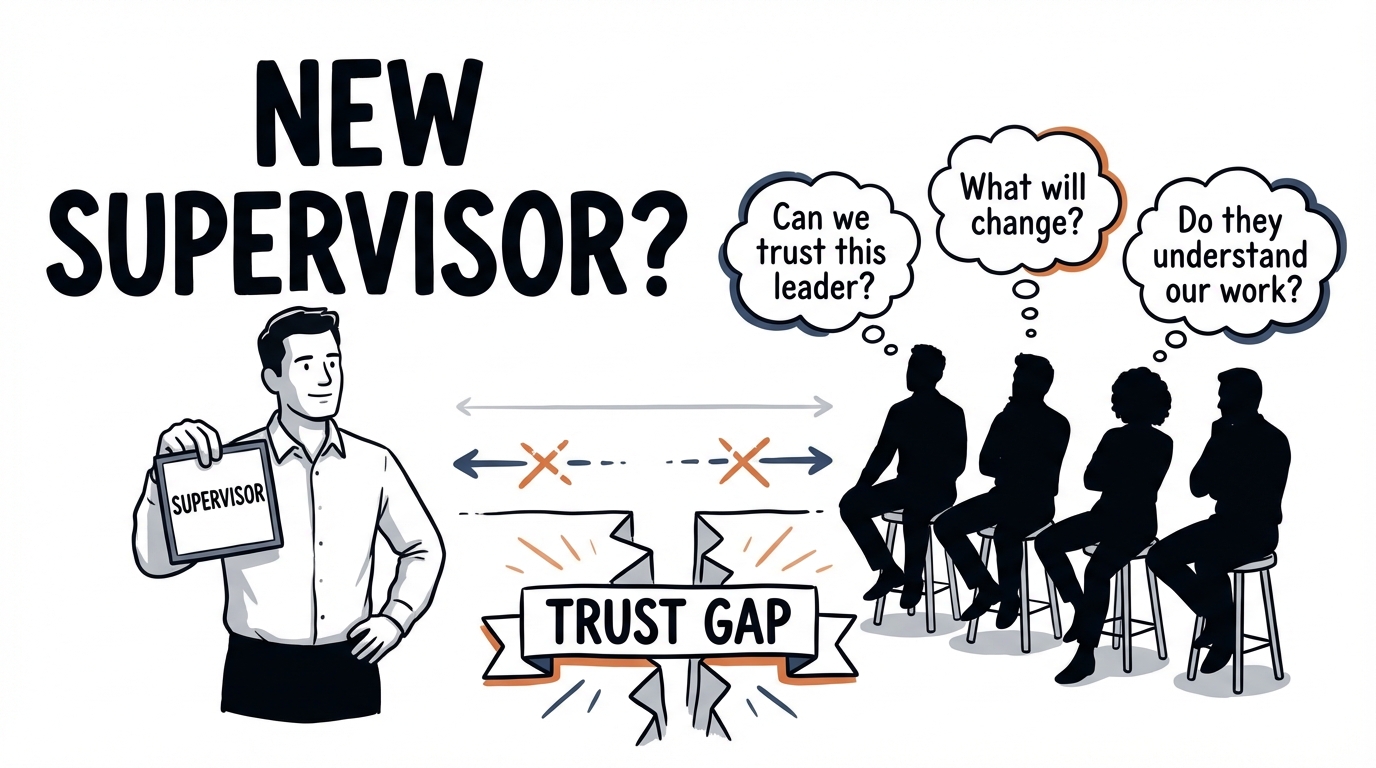
Understanding the Team’s Perspective When a New Supervisor Arrives
When a new supervisor takes over a team, the change is not experienced by the leader alone.
The team is also adjusting.
Employees often begin asking questions internally as they try to understand what the new leadership will mean for them.
Common concerns may include:
- Will this supervisor understand our work?
- Will processes change immediately?
- Will expectations increase?
- Will this leader support us?
These questions are not always expressed openly. However, they influence how the team initially responds to new leadership.
Another factor that can affect team dynamics is the possibility that someone within the group expected the supervisory role themselves. In many workplaces, experienced team members may believe they are next in line for leadership positions.
When a different individual is selected, it can sometimes lead to quiet disappointment or skepticism.
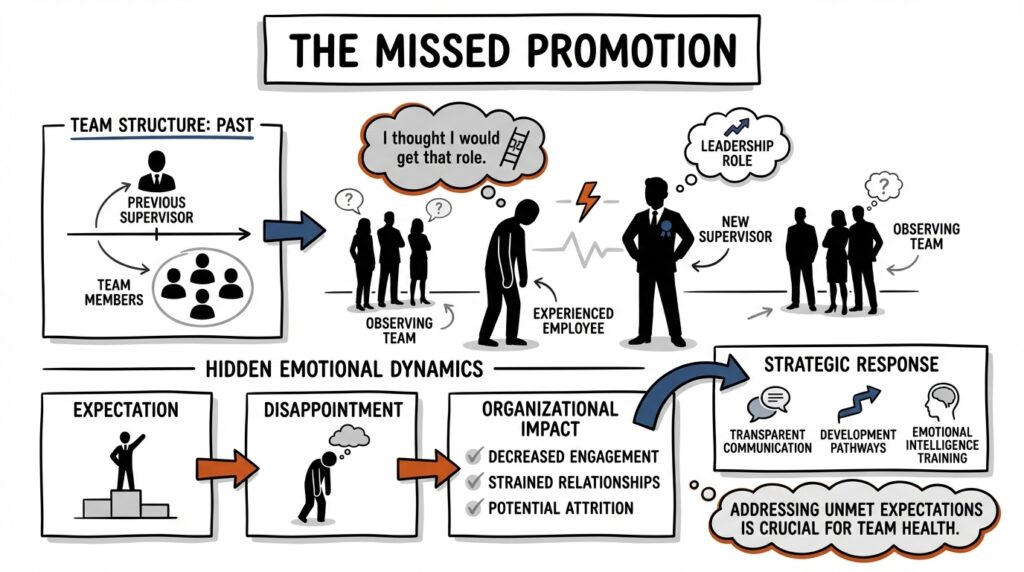
These dynamics are often subtle, but they play an important role in how teams respond to new supervisors.
Recognizing and understanding these perspectives is an essential step toward building strong leadership relationships.
The Biggest Mistake Many New Supervisors Make
One of the most common mistakes first-time supervisors make is trying to prove themselves too quickly.
New leaders often feel pressure to demonstrate their value immediately. As a result, they may begin introducing multiple changes within their first few weeks in the role.
Examples of this behavior might include:
- Introducing new reporting structures
- Changing workflows or processes
- Adjusting performance expectations
- Redefining team priorities
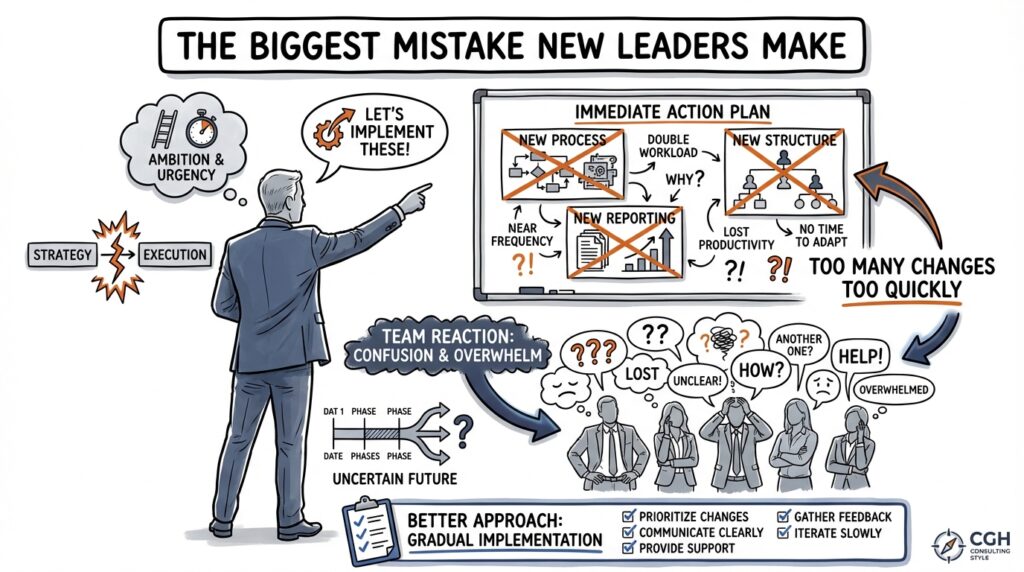
While these actions are often driven by positive intentions, the impact on the team may not always be what the leader expects.
Employees may interpret rapid changes as a signal that their previous work methods were incorrect or ineffective. This perception can create resistance, even if the changes themselves are reasonable.
Effective leadership requires balancing the desire to improve processes with the need to build trust and credibility.
Before making significant changes, it is often more beneficial to take time to understand how the team operates.
Why Observation Is the Most Important First Step
For new supervisors, one of the most valuable early leadership practices is observation.
Instead of immediately trying to fix problems, strong leaders focus on understanding how the team functions.
This includes learning about:
- The workflows that guide daily operations
- The strengths and expertise of individual team members
- The informal relationships that support collaboration
- The challenges or bottlenecks affecting productivity
Every team develops its own culture and patterns over time.
Some of these patterns are visible in documented processes, while others exist informally through experience and collaboration. Observing these dynamics helps supervisors gain a deeper understanding of how work actually gets done.
Approaching the first few weeks as a learning phase allows leaders to build context before making decisions.
Much like a doctor diagnosing a patient before prescribing treatment, effective supervisors take time to study the system before introducing changes.
Building Trust Through One-on-One Conversations
Trust is one of the most important elements of effective leadership.
Without trust, employees may comply with instructions but remain disengaged or hesitant to contribute fully. When trust exists, teams become more collaborative, motivated, and committed to shared goals.
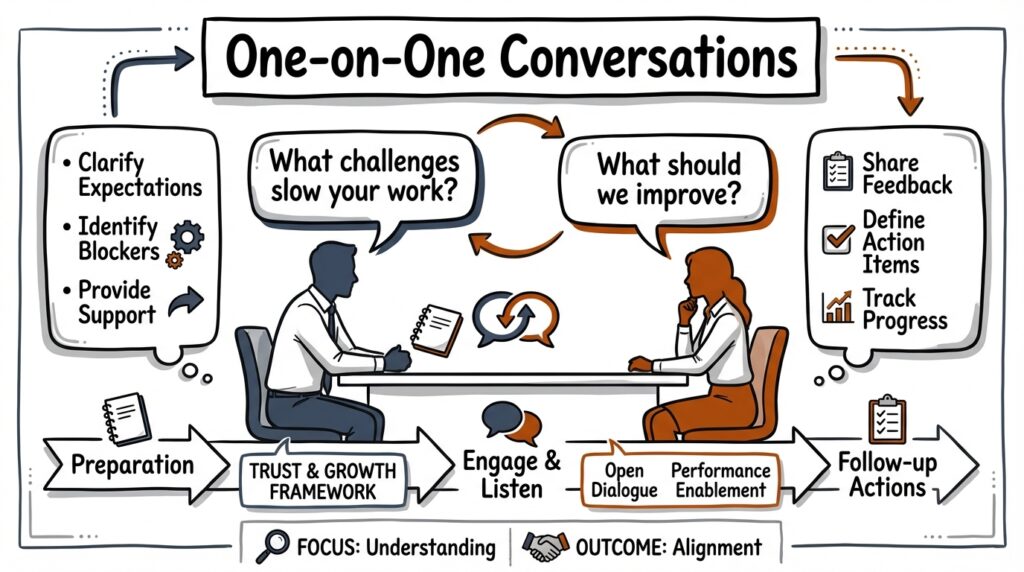
One of the most effective ways to build trust as a new supervisor is through one-on-one conversations with team members.
These conversations do not need to be formal performance reviews. Instead, they should focus on understanding the experiences and perspectives of each individual.
Examples of helpful questions include:
Questions That Encourage Insightful Conversations
- What part of your work do you enjoy the most?
- What challenges slow your work down?
- What improvements would help the team perform better?
- What support would help you succeed in your role?
These discussions serve several important purposes.
First, they provide valuable insights into the team’s strengths and challenges. Second, they demonstrate respect for the perspectives of employees. Finally, they begin establishing the trust necessary for effective leadership.
Over time, consistent communication and follow-through help reinforce that trust.
The Importance of Avoiding Rapid Change
While improvement is an important part of leadership, introducing too many changes too quickly can create unnecessary disruption.
New supervisors often feel pressure to deliver results immediately. However, sustainable improvements typically emerge through thoughtful analysis and collaboration.
Rather than implementing multiple initiatives at once, it can be more effective to focus on a small number of meaningful improvements.
These improvements might include:
- Simplifying inefficient processes
- Addressing recurring team frustrations
- Improving communication practices
- Clarifying expectations and priorities
When employees see changes that genuinely support their work, they are more likely to embrace new initiatives.
A Practical 90-Day Plan for New Supervisors
The first three months in a supervisory role often set the tone for long-term leadership relationships.
A structured approach can help new leaders navigate this transition more effectively.
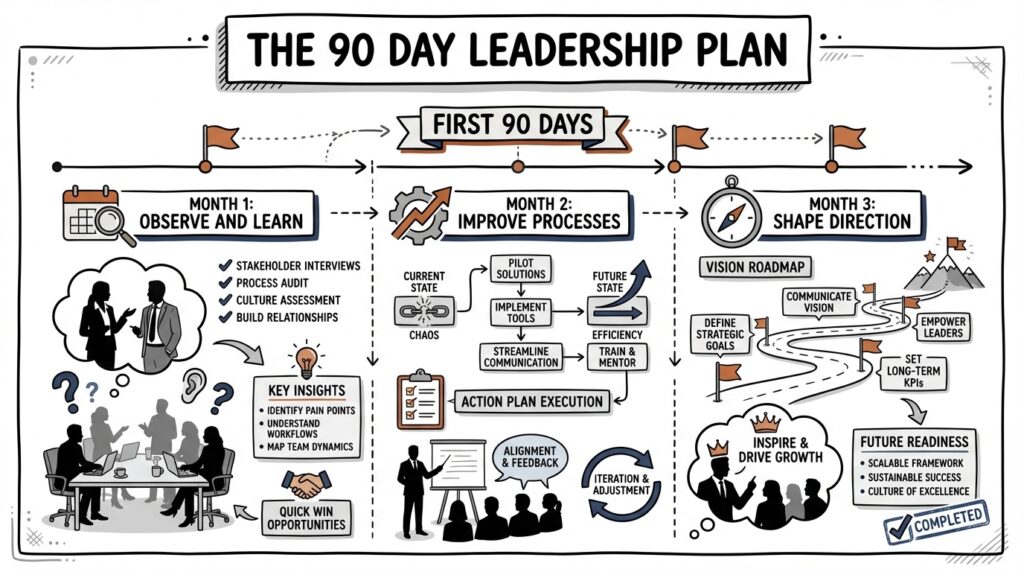
Month 1 – Observe and Learn
During the first month, the focus should be on learning.
Supervisors should aim to understand team responsibilities, workflows, and relationships. This period is ideal for observation, listening, and asking questions.
Month 2 – Improve Key Processes
Once a clearer understanding of the team’s operations has been developed, leaders can begin identifying opportunities for improvement.
The goal during this stage is to address manageable issues that improve efficiency or reduce obstacles for the team.
Month 3 – Establish Direction
By the third month, supervisors are typically better positioned to introduce broader leadership initiatives.
This may include clarifying team goals, strengthening collaboration, and aligning individual responsibilities with organizational priorities.
This gradual approach allows leadership credibility to develop naturally over time.
Bonus Tip: For new leaders, it is very important to understand How to Say No without ruffling any feathers. Our blog about the same topic helps you prepare manage it tactfully.
Authority Versus Influence in Leadership
Every supervisor eventually faces a fundamental leadership choice.
They can rely primarily on authority, using their position to enforce decisions and expectations.
Alternatively, they can focus on building influence by developing trust, credibility, and strong relationships with their team.
Authority may deliver compliance in the short term.
However, influence creates something much more powerful: commitment.
When employees trust their leader and feel invested in shared goals, they become more motivated, collaborative, and willing to go beyond minimum expectations.
This is the difference between a team that simply performs tasks and a team that actively contributes to collective success.
Final Thoughts on Becoming an Effective Supervisor
Stepping into a supervisory role represents an important moment in a professional’s career.
However, the title itself does not automatically establish leadership.
Effective supervision develops through understanding people, building trust, and guiding teams toward shared outcomes.
By taking time to observe, listening carefully to team members, and introducing improvements thoughtfully, new supervisors can build a strong leadership foundation.
The first 90 days provide a unique opportunity to shape how your team experiences your leadership.
Approaching this period with patience, awareness, and intention can make a lasting difference in the effectiveness of your leadership journey.
At CGH, we want the new leaders to be successful and have designed some checklists that can help you in our journey. Feel Free to download your copy.
Frequently Asked Questions About Becoming a Supervisor
What should a new supervisor do in the first week?
A new supervisor should focus on understanding team dynamics, learning workflows, and meeting team members individually before making major changes.
What is the biggest mistake first-time supervisors make?
One of the most common mistakes is introducing too many changes too quickly before understanding how the team operates.
How can a new supervisor earn team trust?
Trust is built through consistent communication, listening to team members, supporting their work, and following through on commitments.
At CGH, we have a vision to ensure all leaders succeed. If you are interested in content of similar nature, you can follow the CGH YouTube Channel.